“Why Setting Boundaries Is an Act of Self-Respect Not Rudeness”
In my work with clients, one issue comes up again and again: so many people struggle to say no or to express how they truly feel especially with friends, family, or partners.
When we explore what holds them back, I often hear fears like:
“What if they get upset?”
“What if they don’t like me anymore?”
“I want to be included — I don’t want to be the difficult one.”
This is one of the biggest misconceptions I see: that having boundaries is somehow rude, selfish, or means you’ll push people away.
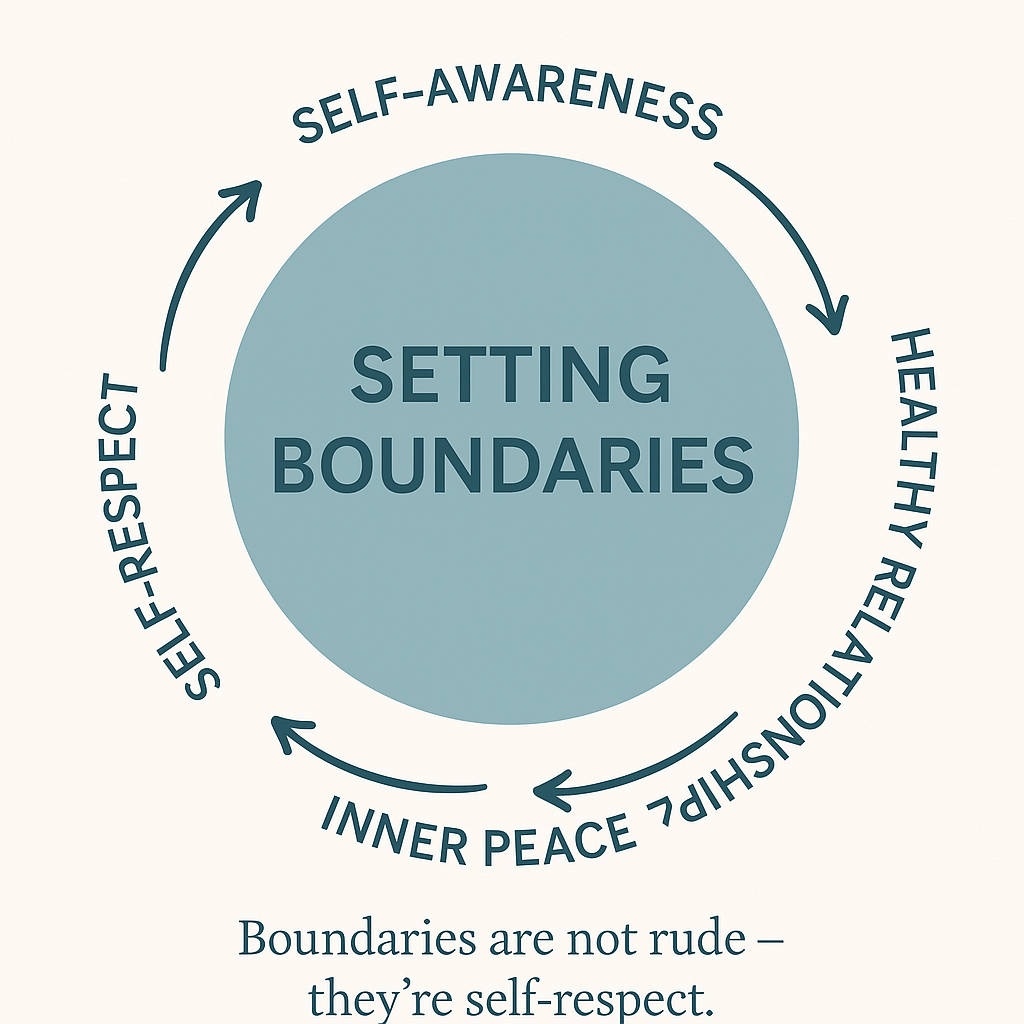
But the truth is, boundaries are not about shutting people out — they’re about protecting your inner peace and showing respect for yourself and your relationships.
A person who loves themselves and has self-respect knows that boundaries are essential.
What happens when we don’t set boundaries?
When you never say no, you teach others that your needs don’t matter.
When you constantly put everyone else first, you become disconnected from your own feelings and wants.
Over time, this leads to:
People-pleasing — saying yes when you want to say no
Bottled-up emotions — frustration that simmers and sometimes explodes
Low self-esteem — feeling like your voice doesn’t matter
Anxiety — carrying tension in your body because you’re always trying to keep the peace
As the book The Body Keeps the Score shows, unspoken feelings don’t just disappear they stay in the body, often as stress, pain, or even sudden outbursts.
What does healthy boundary-setting actually look like?
We were never really taught this at school no one gave us a lesson on “How to say no kindly” or “How to express your feelings without guilt.”
So it’s no wonder it feels awkward at first!
Healthy boundaries often start with small, simple actions, like:
Asking for a few minutes to calm down when you’re overwhelmed
Speaking up when you feel disrespected, using “I feel…” statements
Learning to express what you need without blaming or attacking
A simple script for respectful boundaries
Good communication helps prevent misunderstandings.
One useful tool is the assertive communication framework:
1️⃣ Describe the situation: “When you speak to me like that…”
2️⃣ Express your feeling: “I feel hurt and disrespected.”
3️⃣ Acknowledge their perspective: “I understand you’re frustrated too…”
4️⃣ Collaborate: “How can we make this work better for both of us?”
If people leave when you set boundaries let them
This can be the hardest part:
Some people benefit from you having no boundaries they like when you’re always available, agreeable, and putting yourself last.
When you finally say no, they may pull away.
Don’t see this as a loss see it as clarity.
You’re not losing people who truly love and respect you — you’re only losing those who benefited from you staying small.
Your no matters just as much as your yes.
Your feelings matter just as much as everyone else’s.
💛 Your voice matters. Speak up.
Setting boundaries is an act of self-respect not rudeness.
Your needs, your rest, your emotional safety deserve to be protected.
It’s not selfish it’s healthy.
It’s the foundation for better relationships with others and with yourself.

Leave a comment